
Nitrogen and phosphorus are critical nutrients in biological wastewater treatment. Bacteria utilize nitrogen (in the form of ammonia) and phosphorus (in the form of orthophosphate) to generate new cells, which consist of ~8-12% nitrogen and ~1-2% phosphorus by weight. While most municipalities and some industries have excess nutrients entering their wastewater plants that must be removed, many industries have to supplement nitrogen and/or phosphorus into their biological treatment systems to support a healthy biomass. Nutrient deficiency in a wastewater system limits the number of new cells that can be produced, impacting the sludge quality as well as the amount of biochemical oxygen demand (BOD) that can be reduced.
In activated sludge systems, the primary symptoms of nutrient deficiency are excessive filaments and excessive polysaccharides, or slime, which can also result in increased foaming. Excessive amounts of both filaments and polysaccharides interfere with sludge compaction and dewaterability. Reduced compaction in a secondary clarifier can result in raised sludge bed levels that can threaten effluent compliance if they get too high. To lower bed levels, operators may have to significantly increase return sludge rates which in turn increases the hydraulic load on the clarifier and can cause sludge washout. This also reduces the retention time of the aeration basin for complete BOD removal.
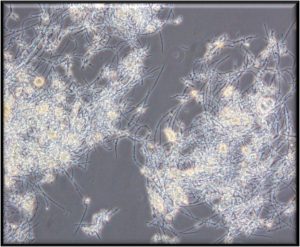
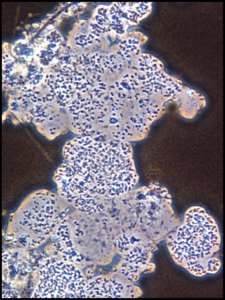
Figure 1: Excessive filaments and polysacchardes in sludge
When a biomass is chronically nutrient deficient, it is not a simple fix. After nutrient sufficient conditions have been restored, the old biomass must be wasted, and replaced by a new biomass that has less filaments and polysaccharides. Maintaining sufficient nitrogen and phosphorus levels in the system is essential for operating a healthy treatment system with well-compacting sludge.
In Aerated Stabilization Basins (ASBs), nutrients serve a slightly different purpose. Filaments and polysaccharides are lesser problems, as these systems do not rely on secondary clarifiers for liquid-solids separation. In ASB systems, where BOD removal is a function of the amount of bacteria and retention time, facilitating exponential growth of bacteria with sufficient nutrients can have a significant impact on the efficiency of the system. As retention time is reduced due to sludge buildup in the ASB, nutrient feed is a lever that operators can pull to speed up BOD removal during high loading events. Figure 2 shows the impact of supplemental nitrogen on BOD removal for a given retention time.
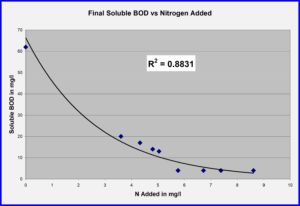
Figure 2: Soluble BOD concentration as a function of supplemental nitrogen
Contact EBS today to learn more about finding the right balance of supplemental nitrogen and phosphorus solutions for your biological wastewater system!